Did you know there’s a rattlesnake vaccine for dogs?

Every year, around 300,000 dogs and cats are bitten by venomous snakes in the USA. While many dog owners may know they live in an area with rattlesnakes, they might not know there’s a vaccine available for dogs.

The vaccine has been developed to provide protection against the Western Diamondback Rattlesnake’s venom. While it is most effective against bites from this particular snake, it also gives some protection against similar venoms through generating protective antibodies that can neutralize the venom.

Dogs with the antibodies experience less pain and have less risk of permanent injury from a bite. Vaccinated dogs typically have less swelling, less tissue damage, and recover quicker. If the dog is bit it should still see a veterinarian.

How often the dog should be vaccinated depends on how big the risk is, how big the dog is, and other factors.

If your dog is bitten by a rattlesnake or other snake, it is always an emergency. Even a vaccinated dog needs to see a veterinarian for evaluation – the dose of venom can be more than the immunity from the vaccine can handle. Bites from non venomous snakes are also serious, because they can lead to infections, and the dog might need antibiotics. If your dog is bit by a snake, time is of the essence. Go see at vet at once.

To learn more about rattlesnake vaccine, click here to visit Red Rock Biologics.

Rescue dog saves family from fire

A couple of years ago, Teddy the Golden Retriever was alone in a state park in Livonia NY, slowly starving to death. Teddy was lucky – he was rescued, and adopted by Ms Vanzandt who nursed him back to health.

When Teddy’s owner headed out of the country for a short trip, she dropped the dog off with her son and his family. Little did they know how important the dog’s stay would be: he woke them up in the middle of the night, just in time to escape a blazing fire.

The fire started downstairs when flames in a fireplace melted through the mortar between the bricks. Without the dog, the family sleeping upstairs would probably never have woken up. Just minutes after everyone made it out of the house, the building was a ball of flame.

All their belongings are gone, but thanks to Teddy no one in the family was hurt.

Ten signs you’re a dog person

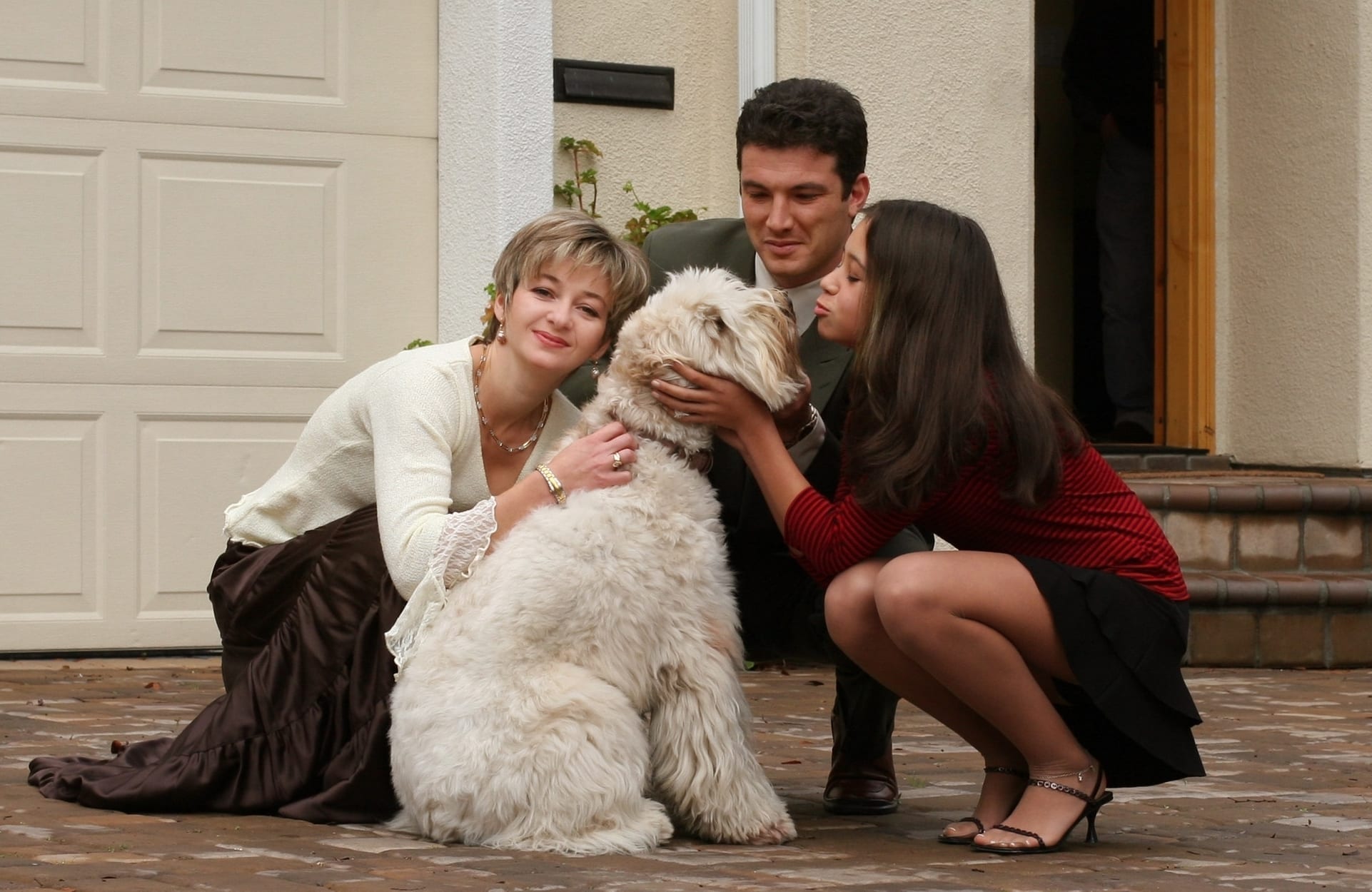
Girl and dogIf you have a dog – or several – life tends to revolve around the furry friend. Here are ten signs you’re a dog person.
1. Your house is littered with old tennis balls, chewed toys, squeaky stuffed animals, rawhide bones, and maybe even sticks from a nearby tree.

2. All efforts to keep windows clean fail – the nose art just keeps reappearing.

3. You know the names of dogs in the neighborhood, but not of the people.

4. You’re always finding empty plastic bag in your pockets and purse.

5. People with dogs are more attractive than people without dogs.

6. If someone says they don’t like dogs you don’t find them trustworthy.

7. You don’t care what happens to people in movies, but you worry the dog might die.

8. ASPCA commercials make you cry.

9. Your dog gets wrapped Christmas presents, and maybe even their own birthday cakes.

10. When you travel, you miss your dog more than your family.

Did we miss any points in the list?

What would it be like to be a cat?

Black catHave you ever wondered why it would be like to be a cat?
While no one can truly experience the world like another species does, here are some highlights of the differences between humans and cats.

A cat’s vision is quite different from a human’s. Cats see colors, but not in the same way we do, and the muted colors make it easier for them to see movement. They also see well in light conditions that would render a human virtually blind.

On the other hand they can’t focus on anything that’s closer than a foot away, and they use their whiskers for detecting objects close the their bodies.

Cats also move quite differently from humans. They have a unique skeletal structure that lets them scale vertical walls, balance on the top of fences, and land on their feet. Their posture allows them to move quietly as well as absorbing the shock of falling from heights many time their size. In addition to all this, their back legs work almost like springs and can propel them upwards and forwards at great speed.

The cats’ ears are also different from a human’s. They can rotate their ears independently up to 180 degrees, and they can hear a wider range of sounds than we can. A cat with normal hearing can detect 11 octaves, which is two more than a human and even more than a dog. They also have a much larger number of neurons between the ear and the brain than most other mammals, so they can decipher all this information quickly.

So, what about the sense of smell? A cat has a sense of smell at least 100 times better than a human, and it can distinguish between thousands of smells. They also have a secondary scent organ above the roof of their mouths to help them detect odors when they breathe.

Science shows how much we love our pets

People love their pets. Coming home to the waiting cat or dog can be the highlight of the day, and many experience separation anxiety if they have to leave their pet for an extended period of time. A new study shows there is a biological explanation to our connection to pets.

The study compared MRI scans of brains of mothers looking at images of their dogs and images of their own children. Both types of images activate the same areas of the brain – with two differences: the photo of the child activated a region associated with forming bonds while the photo of the dog activated an area associated with facial recognition.

The next step will be to replicate the experience with men and women without children.

It is too early to conclude exactly what this means, but we already know pets are good for physical, emotional, and psychological well being. Many studies show pet owners live longer, have lower blood pressure, and get other physical advantages to non pet owners.

There are many health benefits to pets

Nearly half of states have laws saving pets from abusive relationships

Nearly half of the US states have laws saving pets from abusive relationships in cases of domestic violence. The laws allow courts to order the protection of pets using the same statutes that protect the pet’s owner with restraining orders and similar.

That means that if a dog’s owner is the victim of domestic violence and gets an order of protection against the abuser, the pet is safeguarded under the same order.

Many pets get stuck in the middle of abusive relationships where the abuser use their victims’ dogs and cats as pawns – often killing them in the process. 70 percent of victims of domestic violence report that their abusive partner has threatened to hurt or kill a pet.

Some women’s shelters in the USA allow women to bring pets when fleeing an abusive situation, but many cannot offer this service, and nearly 50 percent of women in an abusive relationship  stay to protect their pet.

Without these laws, the abuser can keep the pet or try to take it. The abuser can also try to get visitation rights. With the law, pets can be placed in safe foster homes until their owner gets settled.

Cat tracks down owner in nursing home

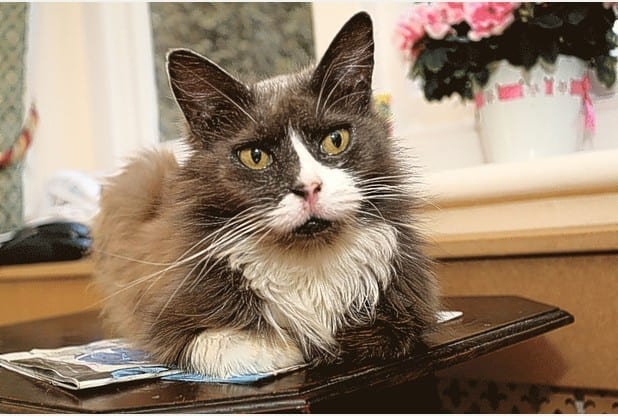
When Mrs Nancy Cowen in Westcott, England, had to move into a nursing home, she left her cat Cleo in the care of the neighbors. Normally, that would be that, but Cleo had plans of her own.

A couple of weeks after Mrs Cowen’s arrival, the staff at the nursing home noticed a friendly cat hanging around the house. The cat would sleep on benches outside the facility, and they thought she was a stray begging for food.

It took another couple of weeks before one of the carers picked the cat up in the company of Mrs Cowen, who said, “That looks like my cat. But my cat lost part of her tail in a traffic accident.”

Of course, the kitty hanging around the facility also missed a part of her tail – because she was Cleo, who miraculously managed to track down her human.

Cleo has been welcomed into the nursing home, and the staff will provide her with a loving home for the rest of her life.

Image from //www.dorkingandleatherheadadvertiser.co.uk

Dog keeps human from chasing cars

Many dog owners have problems with their pooches chasing, or even attempting to herd cars. In the case of Ruby and Garrett it’s the other way around, and this golden retriever does a fine job keeping her human safe.

Garrett is a little boy with a severe case of autism who tends to wander off.  Even with several locks, deadbolts, and alarms on the front door he would leave and go to other people’s houses, or just walk in the middle of the street. He also has a disorder making him want to eat unsuitable items, puts himself in danger, and needs 24/7 supervision. The situation was so bad the family avoided going anywhere out of fear of losing him.

The arrival of Ruby changed everything.

Ruby is a service dog who has undergone extensive training by Tender Loving Canines to help her autistic boy. She not  only keeps track of Garrett – she is also his first and best friend. Persons with autism have a hard time expressing themselves and often can’t make friends, but that doesn’t mean they don’t get lonely. Before Ruby Garrett would barely talk, and now he sings songs to his dog.

Before Ruby was placed with the family, the trainers made many visits to make sure she was the right fit, that she would be gentle with Garrett, and he with her. They still make follow up visits, and right now Ruby undergoes training to track him in case he wanders off.


//youtu.be/ub9Z29R9zqg

Pop up cat cafe in Los Angeles

Black catCat cafes originated in Asia and offer tea, coffee, food, and cat cuddling. They are extremely popular in cultures where people might not be able to have a pet themselves, and today there are cat cafes in Europe and Canada as well. Thus far, the US has lagged behind.

New York City saw a pop-up cat cafe earlier this year, but it might be Los Angeles that gets the first permanent installation. The first try starts today and will be open through October 5th 2014.

The cafe partners with no-kill shelter Best Friends Animal Society Los Angeles, and with the Chinatown Business Improvement District. There will be cats available for petting and adoption, costumed butlers, and entertainment.

Hopes are the cat cafe can become a permanent installation, and the plans include space to house homeless cats as well as showing visiting shelter cats seeking new homes. There are also plans to open cat cafes in Portland, San Francisco, and Oakland.

The dreams of a permanent NYC cat cafe might also come to fruition soon – there is currently a crowd funding campaign attempting to raise startup funding.

Read more about the pop up cat cafe here.

Surfing dogs?

Many dogs participate in sports, such as agility, dock diving, and flyball, but surfing might not be the first that comes to mind when thinking of dogs and sports. Believe it or not – it’s a real thing, and the first surfing dogs in the USA were documented in the 1920s.

In dog surfing, a dog is trained to surf either alone or with a human on the board. There is also tandem surfing with two or more dogs surfing together – the Guinness World Record for most dogs photographed on a surfboard is eighteen.

This video clip is from the 1930s where a dog named Night Hawk surfed with his owner, Philip K. Auna in Waikiki


//youtu.be/nfeWlHVyBZQ


One of the most famous surfing dogs right now is no doubt Surf Dog Ricochet who interacts and surfs with children with special needs, people with disabilities, veterans with PTSD, and wounded warriors. Besides being great at surfing and having won countless contests, Ricochet is a certified therapy dog. On her website you can find information about the PTSD Battle Buddy Initiative, how to teach a dog to surf, and many other things.

The tips about teaching a dog to surf includes what type of surf board is suitable, how to teach the dog to stand on the board, and many other useful things.


//youtu.be/GFVk0vJUGs0


Manatee watches over dog waiting for rescue

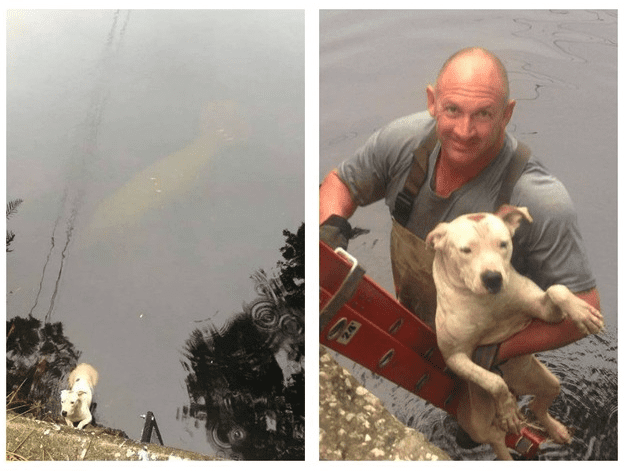
Manatees and dogs don’t usually meet, but if they did they just might be friends. White Boy is a dog from Tampa, Florida, who recently fell into the river. Residents of the Seminole Heights area heard a strange noise from the river Friday night, and saw the dog struggle to climb out the next morning. 

When officers from the Tampa Police Department’s Marine Patrol unit came to the scene, White Boy clung to a cement wall with his front paws – and a manatee stood guard behind him. It is unknown how long the manatee kept the dog company, but it stayed until the dog was rescued.

White Boy has been reunited with his family, and got away from the adventure with bug bites and hurt paws. Hopefully he will stay away from the river in the future.

Image from Tampa Police Department's Facebook page
Image from Tampa Police Department’s Facebook page

Pet shelters step up efforts on keeping pets in their homes

According to the humane society, between three and four million pets are euthanized in shelters each year. It is a mind boggling number, but still an improvement – in the past the number was 20 million. The really sad part is that many of these cats and dogs aren’t strays; they are surrendered by their owners. These pets used to have a home, and for different reasons their owners can’t or won’t keep them.

Every person’s life is more complicated than it appears at first glance. Some things are easy or self evident to one person, and difficult to someone else. Situations change – many pets are given up because their owners can’t afford their vet bills, or even become homeless.

Shelters around the country are stepping up to the challenge, and many now try to work with owners to help them keep their pets. Some need education – they might honestly believe that their dog is happier on a chain in the back yard than in the house – others need practical help, financial support for vet care, help with a pet deposit on a rental, or help with boarding a pet for a shorter period of time.

If the pet is surrendered to the shelter, one of two things can happen: either the pet is killed, or the shelter pays for medical care, food, toys, and the effort to find it a new home. Helping the original owner keep the pet is a win for everyone.

Cutest friends ever?

Image from Facebook: Duluth Animal Hospital

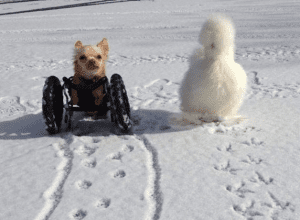
Roo is a two-legged Chihuahua, and Penny is a fluffy chicken. They should reasonably never have met, but they were both rescued by the Duluth Animal Hospital

Roo was born without front legs, and was allegedly found freezing in a ditch when he was seven weeks old. Penny was a mere nine weeks when she was rescued from an experiment program. Today, they’re the best friends anyone can imagine.

They spend their days together at Duluth Animal Hospital, snuggle together, take baths together, and dress up for the holidays together. Watch the video for images of ultimate cuteness!

//youtu.be/maQBdmGPlMo

Is your dog an optimist or a pessimist?

Some people have a decidedly sunnier outlook on life than others who tend to expect the worst. Up until most of us have thought this is a human trait, but it turns out that dogs can also have a predisposition towards optimism or pessimism.

This new information comes from the University of Sydney, and started as a doggy personality test to determine the best service dogs for particular tasks. Dogs with a more pessimistic look on life tend to be more careful and reluctant to take risks – which makes them better guide dogs for the disabled.

Optimistic dogs are more persistent and tend to do better in, for instance, search-and-rescue settings where a pessimistic dog might give up. The optimistic dogs also recover quicker when something bad happens.

//youtu.be/gpUyrmpdfvI

Missing Philadelphia dog found in Oregon

Gidget is returning home
Photo from Washington County, Oregon, Animal Services in Hillsboro, Oregon

Months ago, Gidget the Jack Russell terrier went missing from her home near Philadelphia.  Luckily, she was microchipped. She was found wandering the streets of a Portland Suburb – 3,000 miles away from her home. Thanks to the microchip, shelter workers could identify the owner, and Gidget will soon be taken back home.

Gidget disappeared right after easter, and she’s the only one who knows how she ended up in Oregon, and what she has been doing since April. It was surely a big adventure.

She has never lived in Oregon and is unlikely to have walked there on her own, but who brought her is still a mystery. Shelter workers say she was thin but in good shape when she came to the shelter.

Gidgets owners didn’t have the money to fly out and get her, but sunshine stories like this bring out the best in many. Several people have offered to pay for transportation, and PetLink – the company that manufactured Gidget’s microchip – will pick up the bill for her flight back home. A man also came to the shelter and paid for all expenses in caring for the dog.