Store employees make home make wheelchair for paralyzed dog

Wally is a Tampa Bay rat terrier who recently suffered a stint of bad luck. His human, Rebecca Pierce, dropped him off at their vet’s kennel service for a quick trip out of town, and came back to find Wally’s back legs paralyzed.

The vet believes Wally has a herniated disc in his spine, and poor Wally uses his front paws to get around, dragging his legs behind him.

Clearly, Wally needed help while the vet worked on figuring out both what happened and whether the condition can be reversed. Pierce saw videos of people making their own pet wheelchairs, and brought Wally to Home Depot, hoping to find material to build something for her pup.

Little did she expect to meet guardian angels dressed in orange aprons: two of the store employees spent hours building a perfect wheelchair. To make things even better, the store management decided to cover the cost.

Wally is seeing a doggie chiropractor and he is regaining strength in his legs, but it will take a while for him to walk again.

Read more of the story here.

Five fun trivia-facts about dogs you don’t know

Most people know something about dogs, and if you have found your way to the PlexiDor page you probably know a lot about them. Besides being good company, they make excellent conversation starters. Here are five fun trivia-facts about dogs you might not know.

5. New Zealand town has buildings shaped as sheep and dogs

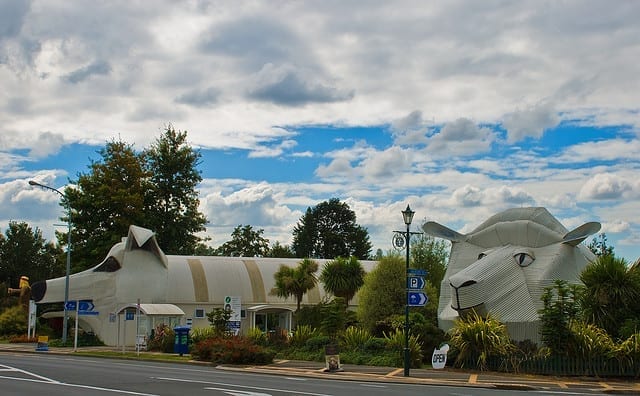
Tirau is a small town on New Zealand’s north island. The town was traditionally a farming community, but has started to make money as a tourist attraction. They have a tradition of using old, discarded, corrugated iron to create art, and they have a craft store shaped as a sheep along with an information center shaped like a dog.

Sheep and dog building, image from strange buildings.
4. Who cleans up after a seeing eye dog?

These dogs are highly trained professionals. They guide their handler through complex environments, traffic, and more. They only do their business on command, and the males are taught not to lift their leg when peeing. This makes it possible for a handler to pet the dog once it’s doing its stuff and figure out what’s going on. If the dog’s back is rounded, cleanup will be required.

3. Seeing eye dog was first dog to become a “Million Miler”

Speaking of seeing eye dogs, service dogs are allowed everywhere open to the public. That includes planes. Nesbit was a seeing eye dog who earned over one million Delta airline miles in his life. He even had his own frequent flier card.

2. Stray dogs in Afghanistan saved 50 soldiers

The troops made friends with a few stray dogs, and when a suicide bomber tried to enter the soldiers’ quarters to kill the 50 men inside, the dogs attacked. One of the dogs was killed in the incident, but the others were celebrated as heroes. It turned out to be pretty expensive and difficult to bring the dogs to the US, so a Facebook group raised $21,000 to fly the dogs to America.

1. The average dog knows math

Most dog owners think their pooches are smart, but few people know exactly how smart. One Border Collie understands a vocabulary of over 1,000 words, and has shown a grasp of grammar. The average dog can understand up to 250 words and gestures, can count at least up to five, and perform simple mathematical calculations.

Bonus trivia: 

While pet “holes” have existed almost as long as cats and dogs have accompanied humans, Sir Isaac Newton is credited with inventing the modern pet door.

Secondhand smoke harmful to pets

While no one has measured exactly how many pets die from secondhand smoke each year, vets know from lab tests and office visits that inhaling smoke causes cancers, allergic reactions, and inflammations in pets.

Several schools, including Tufts University’s School of Veterinary Medicine in Massachusetts and Colorado State University have studied the connection between secondhand smoke and cancer in pets. The results are discouraging; breathing in smoke can cause malignant lymphoma in cats, lung and nasal cancer in dogs, and various respiratory problems in both species.

Dogs are susceptible to smoke, but cats even more so, and it is important to make pet homes smoke free. Lymphoma is one of the leading causes of death in cats. Repeated exposure to smoke doubles a cat’s risk of getting cancer. Living with a smoker for five years or more quadruples the risk.

Symptoms of cancer include coughing, problems breathing or eating, excessive drooling, weight loss, nasal discharge, vomiting, and bleeding and sneezing. Cancer kills more dogs and cats than any other disease.

If you’re trying to quit smoking and turn to e-cigarettes, be careful how you store your cigarettes and accessories. Dogs are attracted to nicotine cartridges from e-cigarettes and can take them out of the trash. Make sure to store all parts of the cigarette along with any fluids used out of reach of pets and children.

The Majestic Pallas Cat

Pallas cat image from WikipediaThe Pallas cat isn’t your average house cat; these furry felines are native to the steppe regions of Central Asia where they live on high altitudes. They are solitary and spend their days in caves or rock crevices, coming out to hunt in the late afternoon. The Pallas cat is rare and doesn’t do well in captivity.

No one knew there were Pallas cats in Nepal until researchers stumbled over them when looking for snow leopards high in the Himalayan mountains. They saw something scurry away that looked like half house cat and half snow leopard.

Now they’ve been recorded in the wild for the first time, by camera traps 14,000 feet above sea level. Turns out they’re smarter than we gave them credit for. At least one Pallas cat discovered the camera trap and went to investigate.

Police officer shows the danger of hot cars

Every year, children and pets die in hot cars. Regardless of information campaigns, people keep leaving babies and dogs in cars, and Texas has topped the number of fatalities around the USA for the past twenty years. 

Texas Corporal Jessie Peterson made an experiment, and posted a video to YouTube of himself staying inside his parked patrol car in the sun. He held out for 30 minutes, and had to leave the car to recover. When the temperature outside nears 100 degrees, the temperature inside the car quickly jumps up to as high as 170 degrees.

Heat-related injuries can cause organ failures, seizures, and hallucinations, and if the exposure to heat remains, death.

Peterson is a trained officer in good shape, and did his experiment in a safe environment with help nearby. This is not something that should be tried at home. And please, do not leave your children or your pets in the car.

To read more about the experiment, follow this link.

Police dog sniffing out computer hardware

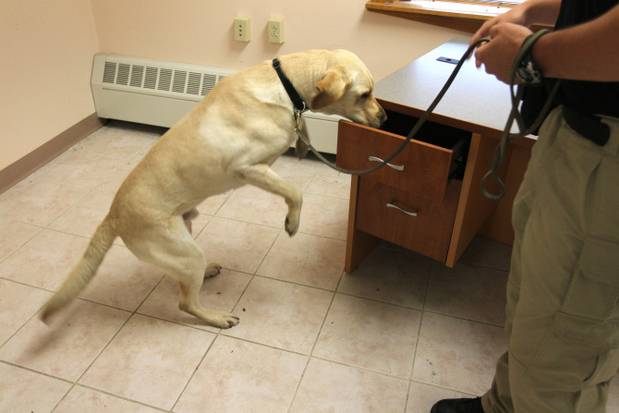
Dogs help law enforcement in many different ways, but few would have predicted the talent golden labrador Thoreau uses in his service to the Rhode Island state police. Thoreau has been taught to sniff out hard drives, flash drives, and other computer components.

This is of value to the police in the fight against child pornography. Storage devices with evidence are small enough to be hidden in places where the officers can’t find them, which allows child pornographer to go free. Thoreau can join in on a search warrant and find object impossible for a human to detect.

Thoreau is new on the job after five months of specialized training, and has already helped secure an arrest warrant. He found a flash drive with child porn stashed deep inside a metal filing cabinet.

The four-legged crime fighter was trained in Connecticut at a program that currently trains over 60 dogs in different types of detection work.

Thoreau is a computer hardware detector dog
Image from providence journal.com

Arlington police officer saves pit bull – twice

About a month ago, Arlington Sergeant Gary Carter responded to a call of a vicious dog trotting down the road. He found a pit bull wandering along the road, but the dog was anything but vicious; he was lost and trying to make friends.

Carter picked up the dog and brought it to animal services, who reunited him with his owner. A photo of Carter with the dog was posted on the police department’s Facebook page and went viral – it has been seen over 12 million times. After that, Carter didn’t think he’d ever see Jeffrey the dog again.

A few days ago, Jeffrey snuck out of his yard again, and ended up with Arlington Animal Services, again. This time the owner didn’t bail him out, and Jeffrey was stuck at a shelter overflowing with animals. That meant he had days to find a new home, or he would be euthanized.

When Carter heard that Jeffrey was back, and what a pickle he was in, he went to the shelter to take some photos, thinking he could help Jeffrey find a home. It didn’t turn out like that: he adopted the dog instead.

https://www.youtube.com/watch?v=5fwRAW7tCKY

Cheetah and dog are best buddies at Dallas zoo

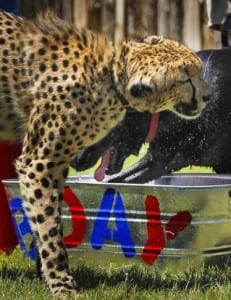
Image from dallasnews.com

A cheetah and a dog might not be the first combination that comes to mind when thinking about animal friends, but at Dallas zoo, Winspear the Cheetah and Amani the black Lab are best friends. A few days ago they celebrated their first birthday – they are born just two days apart and have been raised together.

Labradors are generally cheerful, outgoing, and curious. Amani is not an exception, and his personality is a polar opposite to the shy and cautious cheetah. Their handlers say this is part of the winning formula.

Amani’s outgoing personality makes Winspear feel confident and safe, and together they travel to schools, hospitals, and other events to educate people about wildlife.

For their birthday celebration, they got a 200 pound popsicle created by zoo nutrition specialists. It contained canned milk, low-sodium chicken broth, and ice.


How to take good shelter photos

AidiAll shelters and rescues need photos of available pets. A few are fortunate enough to have professional photographers donate time to help, but the vast majority rely on volunteers. This photo can be the most important event in the life of a shelter pet – it is literally a matter of life and death.

The shelter photo will show the pet on the shelter’s website, on Petfinder, Facebook, and other online resources. It’s the pet’s lifeline, in many cases their only hope of finding a new home. At the same time, the animals are stressed, and you’re usually working with low-budget equipment.

Take your time

The shelter crew is often stressed, and it seems like a good idea to get photos of as many pets as possible in the shortest possible time. However, spending just a few minutes with each pet will make the photos so much better, and might very well decrease the amount of time the pet will have to spend at the shelter.

Spend at least 5-10 minutes with a dog, and even 15 with a cat. They need to transition mentally between being in the kennel and being with you.

Find a good spot

If at all possible, take photos of dogs outside. They’ll need a few minutes to explore before they’ll be willing to cooperate. If it’s bright and sunny, shoot in the shade. If you have to take photos indoors, try to find a good backdrop. Anything is better than the kennel. There might be a nice wall or something you can use.

Take many photos

With digital technology it’s possible to take many photos in a short period of time without extra cost. Pets are difficult to photograph because they move all the time. If you take many photos, the chance of one being great is much bigger than taking one and hoping it will be fantastic.

Don’t use the flash

Many good photos of dogs and cats have been ruined by using the flash. It can scare them, and the flash reflecting from their eyes or shiny coats can make them look like a pet belonging to Dracula. It’s also helpful not to hold the camera in front of your face. The pets will trust you more, and relax better, if they can see your face.

Talk to the pets

When it comes to dogs, you want to get them from “I’m in jail” to “This person likes me.” Talk to them in a cheerful voice. Shelter kitties can be skittish, and here a happy but soothing voice works better. Keep talking. If they can connect with you they might be able to relax a bit, and photo with happy ears or even a smile sells much better than a sad shape crouched in a corner.


Dogs good with children

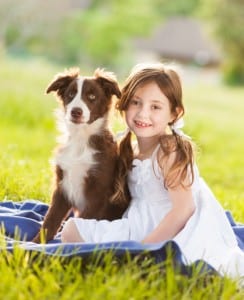
Girl and dogDogs and children can be a great combination, or an absolute disaster. Small children and dogs should always be supervised, and it is important to read the dog’s body language.

If the dog is licking, pulling its ears back, yawning, or turning its head away, it is probably uncomfortable. Never let a child hug a dog; hugs don’t mean the same thing to dogs as it does to humans, and even though they can be trained to accept it, it doesn’t come naturally.

Every year many children are bit and dogs put down, and the adults say, “It came out of the blue,” or “She was just hugging the neighbor’s dog.” Children don’t know and dogs can’t speak, so it’s the adults’ responsibility to watch over the situation.

That said, some dog breeds are better with children than others. Here are some breeds known to be patient with kids.

Beagles are sturdy and never too tired to play. They’re smart, cheerful, and friendly. They might feel that chasing other pets is a good idea, but other than that they get along with almost everything and everyone.

The Bulldog is loyal, friendly, and docile. Most Bulldogs get along well with children, other dogs, and other types of pets. They’re not exactly bundles of energy, but love to lounge on the sofa while watching TV, reading, or playing video games.

The Bull Terrier was bred to be a companion dog, and is frequently used for kids’ TV shows in many countries. In the USA, the Bull Terrier is probably best known for Target commercials. The average Bull Terrier is friendly, loving, and patient with rambunctious children.

Golden Retrievers are confident, smart, loyal, and kind. A typical Golden Retriever is patient and neither aggressive nor timid. They need a lot of exercise and love to play.

The Labrador Retriever is the most popular dog breed in the USA and many other countries. The Labrador is playful, loving, patient, protective, and reliable.

Newfoundlands are huge and loving. The breed has been nicknamed “Nature’s Babysitter” and is known for being kind, gentle, and patient. The Newfoundland is also very protective when it comes to children.

Poodles are extremely intelligent and gentle. They make great service dogs, and are wonderful, good-natured, and patient companions for children. While poodles require regular grooming, they shed very little.

The Vizsla requires a lot of exercise and makes a great breed for active and energetic families with older children. The average Vizsla is energetic but gentle, obedient, loyal, confident, and smart. It forms close bonds with the family and would be happy to follow the children everywhere.
 

Water safety in the pool

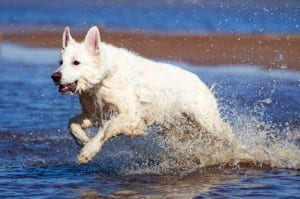
A White Swiss Shepherd needs a large PlexiDor dog doorMany dogs love to swim, whether it’s in a lake or in a swimming pool, but even if your dog is a natural born swimmer he or she might need a little extra help. Here are some easy tips on staying safe in the pool.
Pay attention

Even if your dog is good at swimming, never leave a dog unsupervised in the pool. It’s easy to get distracted, but keep your eyes on the dog. If something happens they might not be able to bark for help. Drowning is a silent death both for people and pets.

Start slowly and build confidence

Most dogs are cautious the first times in a swimming pool. Start slowly and let your furry friend build confidence.

Keep track of the time

Swimming is great exercise, but it’s important to limit the time your dog spends in the pool. Especially older dogs and puppies often underestimate how tired they are. Even dogs in their prime might be using new muscles when swimming, and can tire quickly. Start with brief dips in the pool and increase the time gradually.

Teach your dog how to get out of the pool

Some pools have steps on one side. It is important to teach your dog where they are, because it’s impossible for a doggie to get from the water up on the ledge. Other pools only have a ladder. It is possible to teach a dog how to use a ladder, but it doesn’t come naturally to them, so this might take some time. Patient practice makes perfect!

Rinse

When the swim is over it’s important to rinse off all pool water – otherwise your dog might lick it off and ingest chemicals. Chlorine and other pool chemicals can also irritate the skin.  Also make sure to dry the ears. You can dab them gently with a soft towel.

Have fun, and enjoy the summer!

Secrets your pets wish they could tell you

shutterstock_1519023_catanddogIf cats and dogs could speak, they’d probably give us some hints on things we can do better. Cat and dog owners do their best, but it would be easier if our loved furry friends could give us some hints. Here are some examples on areas where we could improve.
Many cat-owners play with a laser pointer. Have you noticed your cat might seem frustrated after the game? Cats live to hunt, and if you end the game with pointing at an actual toy, the cat might get to “catch and kill” it.

Many dog owners get frustrated with their pooches during walkie-time – it’s difficult for a human to understand why the dog must walk around in circles before doing its business. Especially frustrating when it’s cold or raining, right! Dogs have an instinct to be aligned with the earth’s magnetic field before they do what they need to. Science have yet to figure out why.

Too much nap time can affect a pet’s personality. Many behavioral problems can be solved by taking a longer walk or giving some more play time.

All dog food is the same, right? Not really. There is special food for puppies, enforced with the nutrition a growing body needs. There is also special food for seniors, formulated to keep old dogs healthy.

Subtle changes in a pet’s behavior might mean it’s time to go to the vet. They can’t tell us how they’re feeling, and both cats and dogs are experts at hiding illness. Watch out for changes such as eating slower, drinking more, or getting tired quicker than usual. It might be time for a check-up.

And, if your dog isn’t paying attention during training, you might want to switch treats. Find something moist, icky, and smelly. Like, a piece of rotisserie chicken.

Peculiar cat laws

There are peculiar laws of many kinds across the USA. Many state laws are really old and were never updated. Allegedly, Florida women who are single, divorced, or widowed cannot parachute on Sunday afternoons. Also allegedly, Hartford Connecticut deems it illegal to educate a dog. That one seems impractical. Another funny rule that allegedly exists says donkeys in Arizona may not sleep in bathtubs.

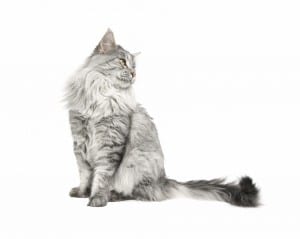
maine coon catCats clearly deem themselves above all laws, but what does the legal system say about them?
  • In French Lick Springs, Indiana, black cats need to wear bells on Friday the 13th.
  • Reed City, Michigan says you cannot keep a pet cat and a pet bird in the same house.
  • In International Fall, Minnesota, cats are not allowed to chase dogs up telephone poles. Interesting. Do Minnesota dogs in general climb telephone poles?
  • Staying in Minnesota,  Duluth states cats are not allowed to fall asleep in a bakery.
  • Barber, North Carolina have prohibited fights between cats and dogs.
  • In Columbus, Georgia, cats cannot yowl after 9 PM.
  • Sterling, Colorado takes a firm stance on cats. There, a pet cat may not run loose without a taillight.

Luckily, there doesn’t seem to be any statutes against cat doors… The truthfulness of these laws has not been verified.

“Rent a rescue dog” leads to adoptions

The Red Mountain Resort in St. George, Utah, has a new attraction. The Pound Puppy Hike matches guests with a local shelter dog for hiking and similar activities. The dogs come from the Aspen Animal Shelter that welcomes volunteers and loans dogs for a stroll through town or a daylong hike. 

These outings serve a double purpose. The dogs get exercise and socialization, and many are adopted.

Some of the pet-friendly Aspen hotels waive their pet fees for anyone who invites a shelter dog to spend the night. A couple of the hotels also provide shuttle service to and from the shelter.

Fairmount hotels have caught on, and at eight hotels around the country “canine ambassadors” greet guests and can be booked for walks or runs around town. The dogs are a bonus for younger guests and for travelers longing for their own pets.

Other hotels offer cats for company, or even fish.

Mutts are awesome!

The majority of dogs put down in shelters are mutts; mixed breeds of unknown origin. All dogs are awesome, but there are many reasons to adopt a mutt. For instance, mixed breeds are thought to adapt more easily than purebreds.

Purebred dogs adhere to standard when it comes to both appearance and temperament. A mutt is unique and you get a one-of-a-kind. That also means they’re not as strongly “programmed” as purebreds, and tend to be more flexible.

If you want a hunting dog or a herding dog, you probably want a purebred that is developed to perform these specific tasks. If you want someone to keep you company around the house, a mixed breed can be much easier to handle than say, a hyper-energetic Border Collie that wants to herd anything that moves.

Many mixed breeds make great service and therapy dogs; they often combine the best properties of their parents. They are also generally healthier than purebreds, because they’re not as prone to specific illnesses.

If you’re the competitive kind, your mixed breed might shine. Many excel in agility, dock diving, flyball, and similar. The UKC even has a special class for mixed breeds.

Dog Breeds
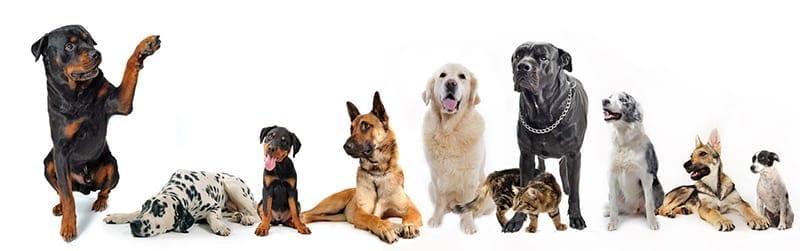
Rottweiler, Dalmatian, German Shepherd, Golden Retriever, Great Dane, and more